





Send Message
Privacy statement: Your privacy is very important to Us. Our company promises not to disclose your personal information to any external company with out your explicit permission.

Flat workpieces are everywhere in precision manufacturing.
Stainless steel components for medical devices
Tungsten carbide parts for cutting tools
Ceramic bearings for high-speed applications
Bearing steel rings for automotive and industrial use
The challenge? Grinding them flat – on both sides – efficiently and accurately.
Traditional single-sided grinding means flipping parts, re-fixturing, and hoping for consistent parallelism.
Double-sided grinding solves this problem.
In this article, we'll explain what double-sided grinding is, why it's better for flat parts, and how a double-sided diamond / CBN Grinding Disc can transform your production.
Flat workpieces require precision, flatness, and parallelism. Achieving all three is harder than it sounds.
| Challenge | Why It's Hard |
|---|---|
| Flatness | Uneven material removal creates warping |
| Parallelism | One side can be thicker than the other |
| Heat distortion | Grinding heat can warp thin parts |
| Fixturing | Flipping parts introduces error |
| Cycle time | Single-sided grinding is slow |
| Step | Action | Issue |
|---|---|---|
| 1 | Grind one side | Side A is flat |
| 2 | Flip workpiece | Introducing alignment error |
| 3 | Re-fixture | May not be perfectly parallel |
| 4 | Grind other side | Side B may not match Side A |
| Outcome | Problem |
|---|---|
| Inconsistent flatness | Unacceptable for precision parts |
| Poor parallelism | Parts fail tolerance |
| Long cycle times | Low productivity |
| High labor | Frequent handling |
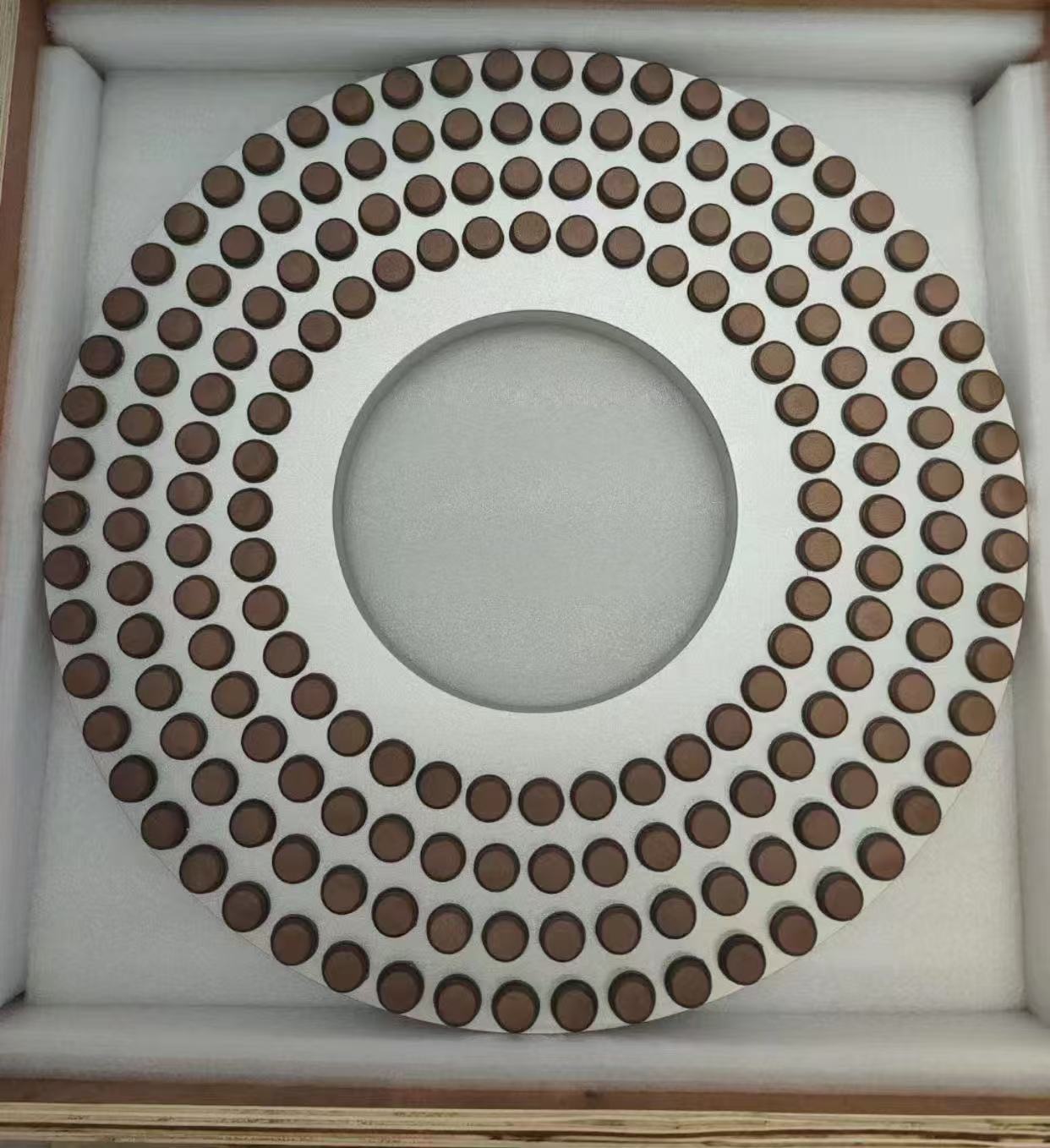
Double-sided grinding grinds both sides of a flat workpiece at the same time.
| Component | Function |
|---|---|
| Upper disc | Grinds the top surface |
| Lower disc | Grinds the bottom surface |
| Workpiece carrier | Holds and guides the part between the discs |
| Abrasive | Diamond or CBN on both discs |
| Step | Action |
|---|---|
| 1 | Place workpiece between the two grinding discs |
| 2 | Discs rotate in opposite directions |
| 3 | Both surfaces are ground simultaneously |
| 4 | Workpiece is finished with flat, parallel surfaces |
| Benefit | Explanation |
|---|---|
| Saves time | Both sides ground in one operation |
| Ensures parallelism | Both sides are parallel by design |
| Reduces handling | No flipping or re-fixturing |
| Consistent results | Uniform material removal |
| Higher productivity | Faster cycle times |
| Better flatness | Even pressure on both sides |
The abrasive choice depends on the material you're grinding.
| Material | Recommended Abrasive | Why |
|---|---|---|
| Stainless steel | CBN or Diamond | Tough material – CBN is ideal |
|
Contact Us
Popular Products
Company News
Industry News

What grinding stone are made of
July 22, 2022 You may also like
Related Information
Related Categories
Email to this supplier Contact Us
Popular Products
Company News
Industry News
What grinding stone are made of
July 22, 2022 About Us Related Products List Contact Us
Send Message
Privacy statement: Your privacy is very important to Us. Our company promises not to disclose your personal information to any external company with out your explicit permission.
We will contact you immediately
Fill in more information so that we can get in touch with you faster Privacy statement: Your privacy is very important to Us. Our company promises not to disclose your personal information to any external company with out your explicit permission. |